
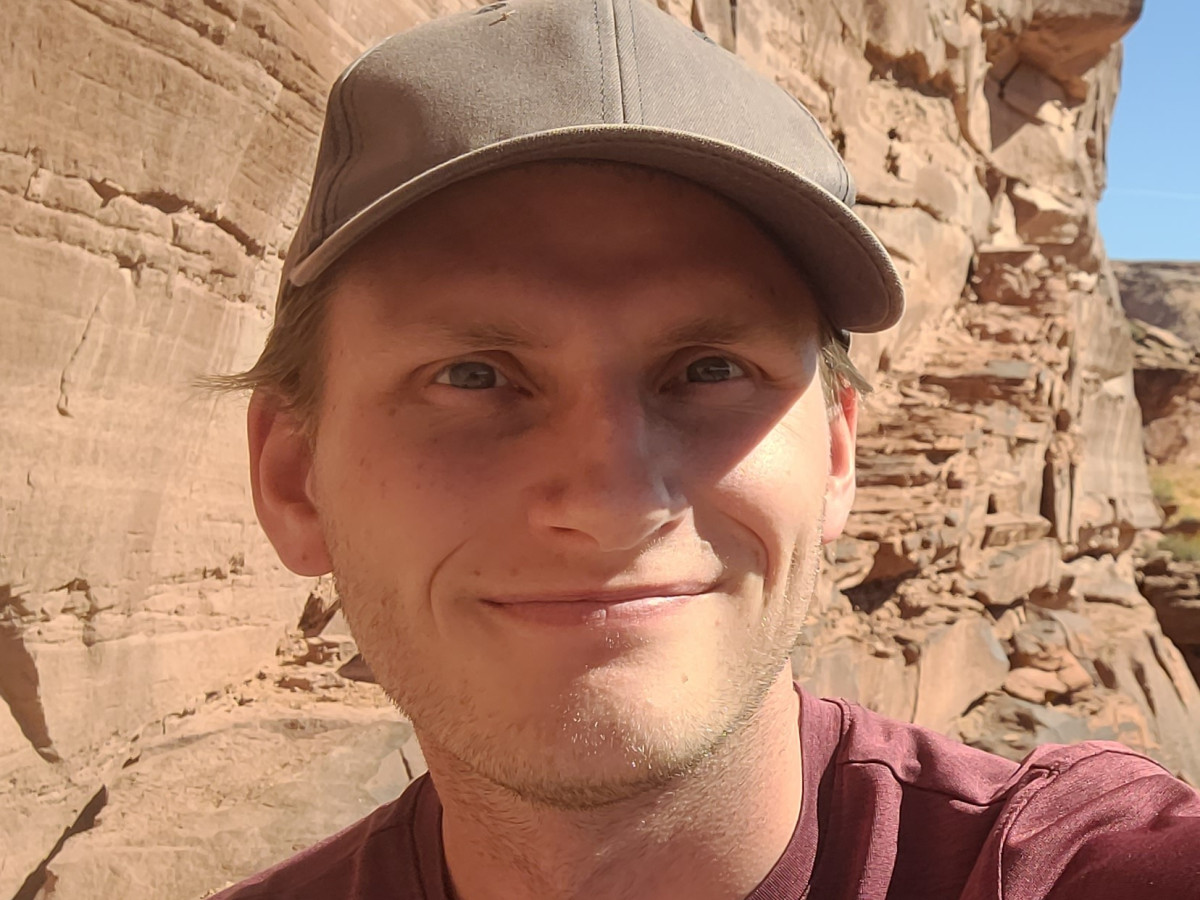
Jaron is a Ph.D. candidate in the Anthropology department at the University of Oklahoma. His path to archaeology began at a young age as a general obsession with museums and history. He received his B.A. (2018) and M.A. (2020) at Brigham Young University (BYU), where he grew a love for the cultures of the greater Southwest. His M.A. thesis titled Long Distance Interaction in Viejo Period Casas Grandes, tracked ancient intergroup relationships over spatial and chronological boundaries to contextualize the influence of Chihuahua peoples in the past.
Since starting his Ph.D. in 2020, Jaron has been involved in various projects from tracking ancient Fremont migration through stable isotopes to agricultural coalescence in late Archaic Sonora, Mexico. His current research seeks to understand major social reorganization events in northern Mexico that can contribute to how we view human social change. Jaron is committed to community-based research projects and continuing to explore this understudied, yet crucial, region.
Jaron is Crow Canyon’s 2025 Lister Fellowship Recipient.
ABSTRACT:
Jaron’s research investigates the social implications after the demise of Paquimé and Casas Grandes in northwestern Chihuahua (post A.D.1450). While recent research has focused on Casas Grandes culture centered at Paquimé, many questions remain regarding the region’s people after its decline. Historical accounts suggest a dramatic shift from intensive agriculture to foraging, but the nature of that transition and its consequences remain poorly understood. To address this gap, he examines continuity and change in subsistence practices and technological production techniques at the regional and subregional scales. Through community-engaged fieldwork involving survey and excavation, he aims to reconstruct Proto-Colonial lifeways. Settlement patterns, resource procurement strategies, and macrobotanical remains provide a characterization of ecological knowledge and subsistence practices. Architectural forms, ceramic production techniques, and lithic technological diversity offer insight into population continuity and group cohesion. The results will help determine whether Proto-Colonial groups retained their cultural knowledge or reflect discontinuity in traditional practices. This research contributes to broader anthropological models of societal transformation, emphasizing adaptive strategies rooted in intergenerational knowledge and practice. As the first field-based study focused on the Proto-Colonial period, it advances our understanding of how societies navigate major reorganizations.