
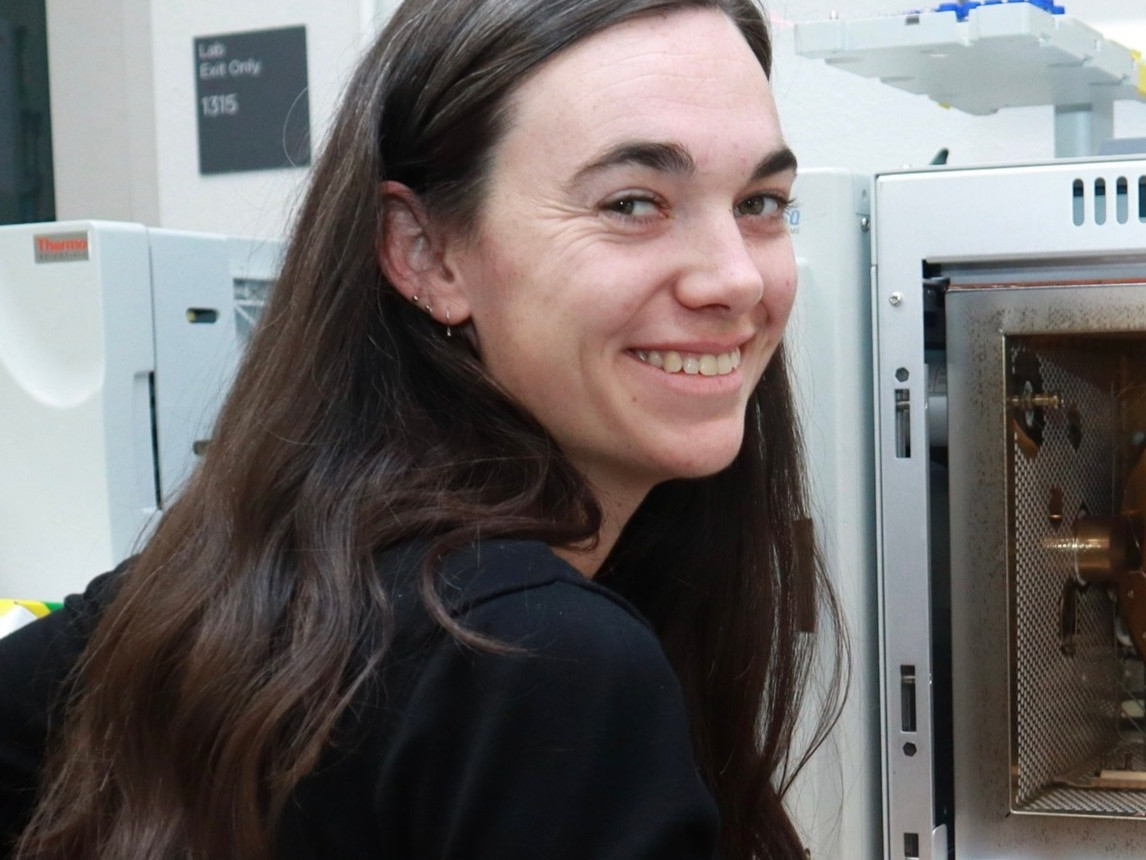
Dr. Emma Elliott Smith is a historical ecologist who integrates zooarchaeological records, natural history collections, and contemporary field data to reconstruct food webs and assess how human activities and environmental change have shaped modern ecosystems. By measuring isotopic ratios preserved in archaeological and museum specimens, her research pushes ecological baselines centuries beyond written records, giving archaeologists and conservation biologists a quantitative framework for evaluating long-term resource use and ecological resilience.
Dr. Elliott Smith earned a B.S. in Ecology & Evolutionary Biology from UC Santa Cruz (2013) and a Ph.D. in Biology from the University of New Mexico (2020). She subsequently conducted postdoctoral research at the Smithsonian National Museum of Natural History, where she investigated ecological relationships in pre-industrial coastal ecosystems of western North America. Now a postdoctoral fellow at UNM’s Center for Stable Isotopes, she integrates zooarchaeological, historical, and modern samples to trace 800 years of change in Rio Grande aquatic food webs. Beyond her research, Dr. Elliott Smith partners with Albuquerque-area educators to lead a student-driven community-science program that brings the river’s dynamic ecological history into K–12 classrooms and shares it with the broader public through community events and exhibitions.